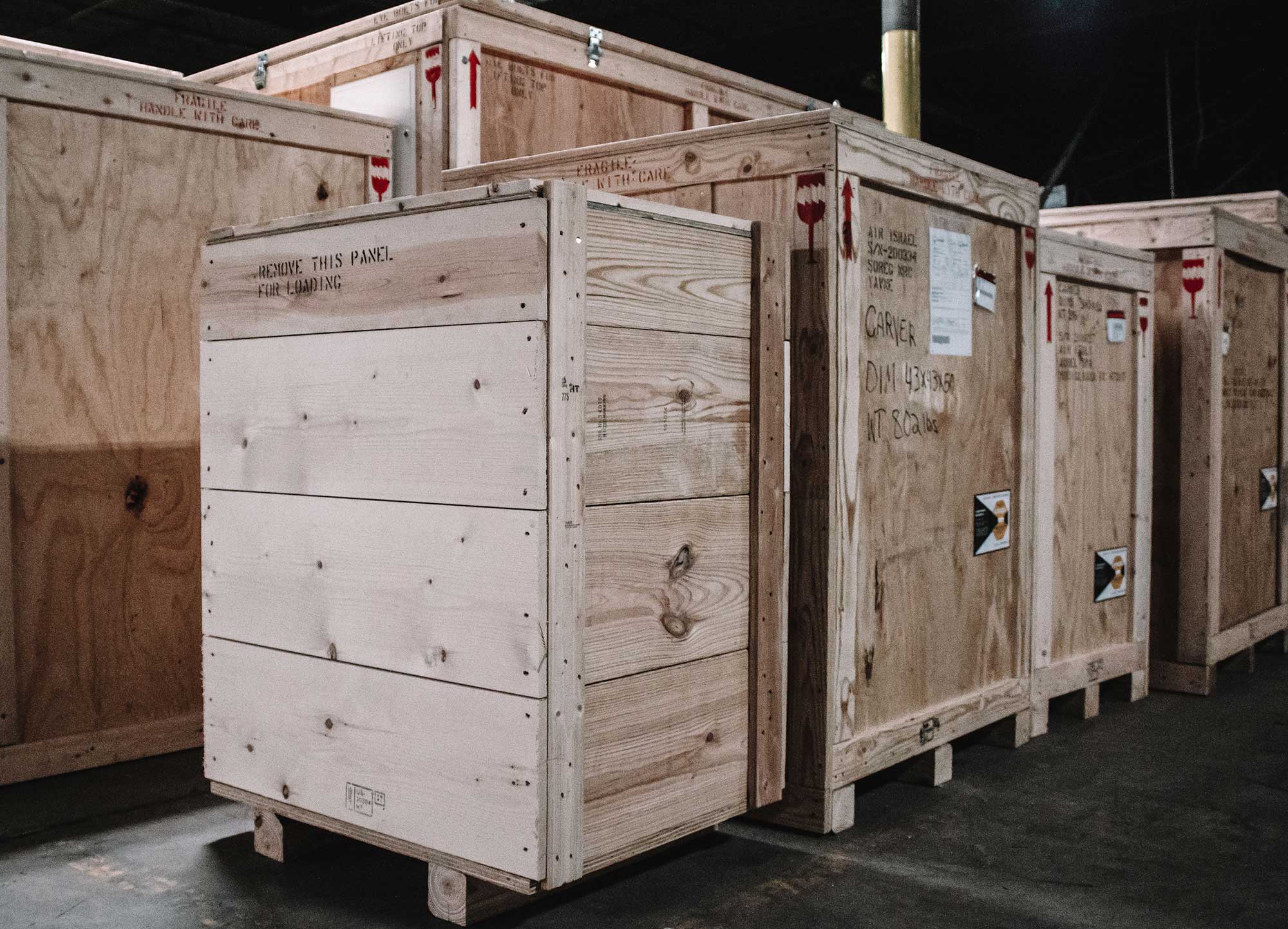
Shipping lithium-ion batteries requires strict adherence to current IATA and IMDG regulations. Between the latest IATA Edition and IMDG Amendment 42-24, standard, non-certified packaging is no longer an option for hazardous materials. If your cargo isn’t protected by an engineered system, you’re risking significant fines, rejected shipments, and the danger of thermal runaway.
Is Your Logistics Strategy Ready?
Don’t let a rejected shipment freeze your supply chain. Express Packing provides the precision-engineered, UN-certified hazardous materials packaging you need to move high-capacity batteries safely by land, air, or sea.
Do you need to verify your compliance status?
Our experts help you navigate the 30% State of Charge (SoC) mandate and UN-certification requirements to keep your cargo moving.
The New Reality: Mandatory 30% State of Charge (SoC)
The “30% Rule” is a critical safety requirement for standalone industrial battery shipments. This rule exists to reduce the “chemical fuel” available if a short circuit occurs, mitigating the risk of fire during transit.
SoC Requirements at a Glance
| UN Number |
Shipping Name |
Requirement |
| UN 3480 |
Lithium Ion Batteries (Standalone) |
Must not exceed 30% State of Charge |
| UN 3481 |
Batteries Packed with or Contained in Equipment |
Requirements vary by Watt-hour rating |
Why Precision Engineering is Your Best Insurance
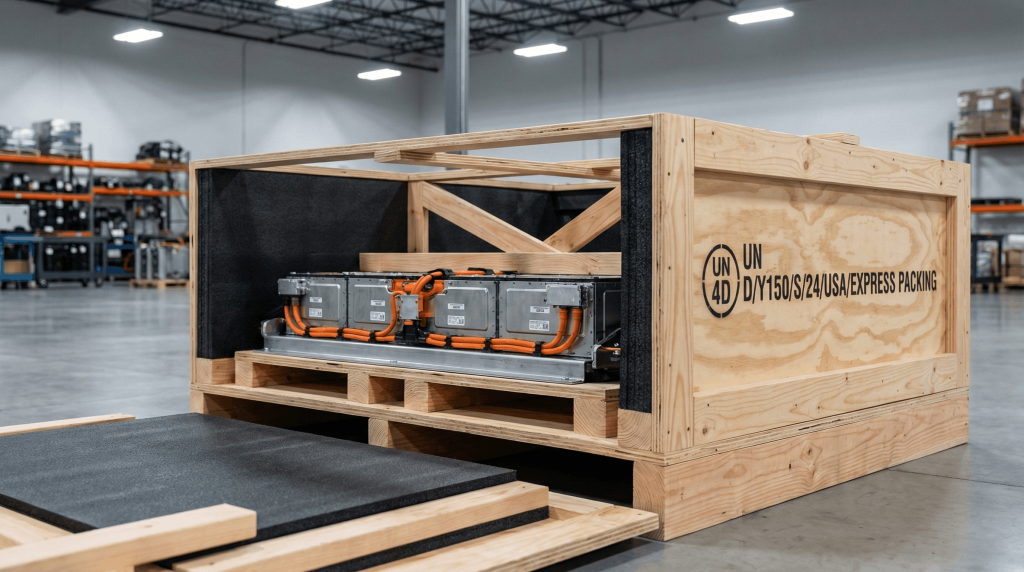
A failing lithium cell can lead to thermal runaway, creating intense heat that triggers “propagation,” where adjacent cells ignite and create a self-sustaining fire. Standard boxes cannot contain that energy. Express Packing crates are engineered to meet these extreme challenges:
- Custom Blocking & Bracing: We engineer custom industrial crates to the exact millimeter to prevent internal shifting—the #1 cause of mechanical battery failure.
- Specialized Internal Packaging: We use custom blocking, bracing, and cushioning materials designed to absorb shock and provide thermal protection.
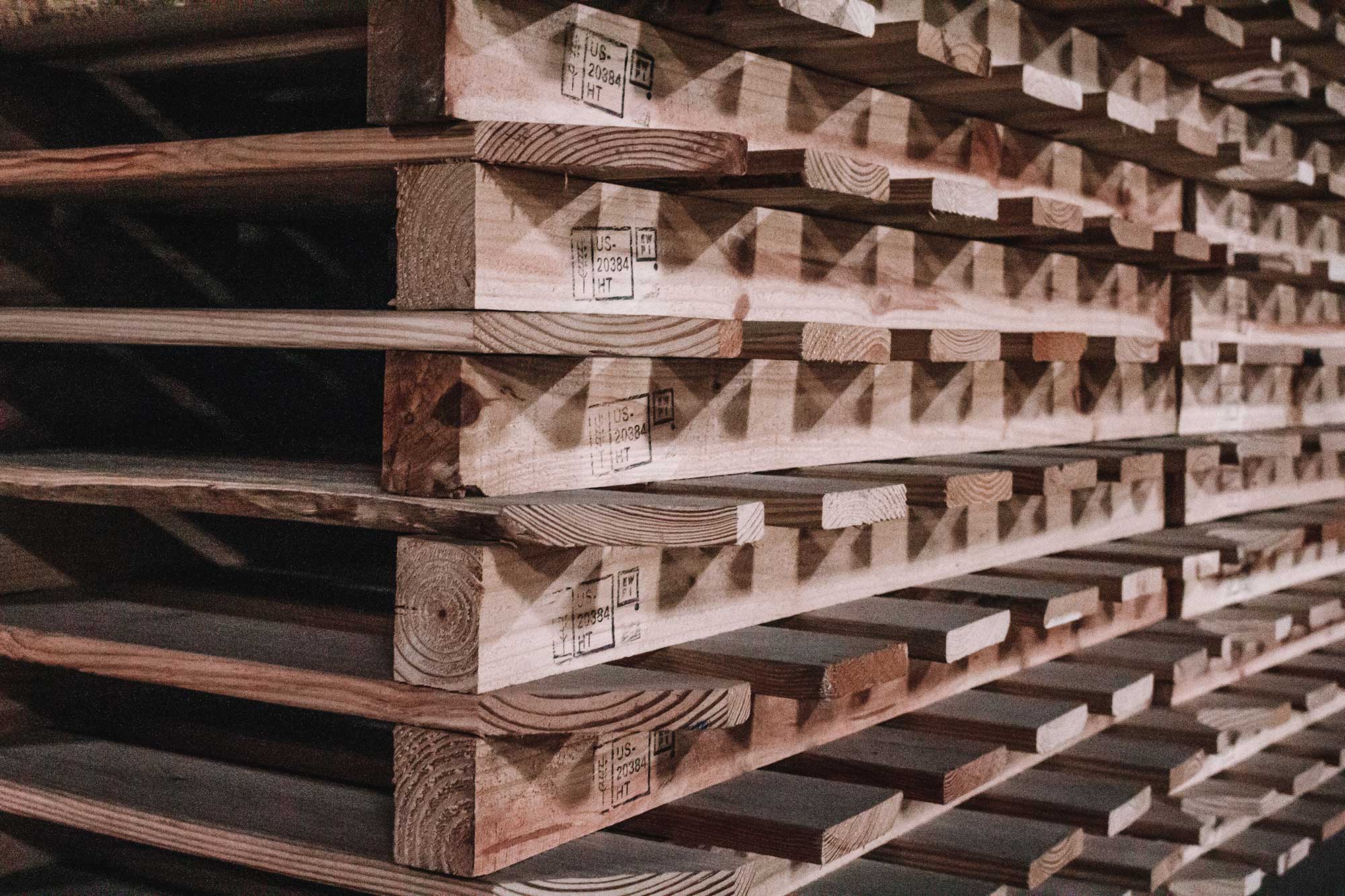
- ISPM-15 Certified: All our wood is heat-treated (HT) for international export, ensuring your crates clear customs without delay.
4D vs. 4DV: Choosing the Right Protection
We offer two primary levels of UN-certified plywood crating. Choosing the right one depends on your product’s variety and shipping frequency.
Comparison: Standard vs. Variation Crating
| Feature |
UN 4D (Plywood Box) |
UN 4DV (Variation Box) |
| Best For |
Consistent, high-volume products. |
R&D, prototypes, and varying sizes. |
| Flexibility |
Limited to the tested configuration. |
High; allows different inner contents. |
| Testing |
Requires new tests for new items. |
Pre-tested for Packing Group I (1.8m drop). |
| Cost |
Lower per-unit cost. |
Higher initial flexibility; saves on individual testing. |
The Cost of “Cutting Corners”
Non-compliance with hazardous materials regulations is an expensive gamble. The Pipeline and Hazardous Materials Safety Administration (PHMSA) issues significant civil penalties for “undeclared” or improperly packed materials, which can reach hundreds of thousands of dollars per violation.
Avoid the massive civil penalties and brand damage associated with improperly packed hazardous materials.
The Express Packing Advantage: On-Site Security
Moving a high-capacity, un-crated battery is dangerous. Our team brings the solution to your floor.
- On-Site Packing Services: We crate your batteries where they stand—ideal for heavy BESS units or EV packs.
- Over 30 Years of Experience: We leverage decades of expertise to build crates that meet the most rigorous industrial and international standards.
Rapid Response for DDR: We provide immediate containment for Damaged, Defective, or Recalled (DDR) batteries.
Does your battery system require specialized on-site handling?
Our mobile teams are equipped to handle large-scale nodes and sensitive aerospace components at your facility.
FAQs
What is the difference between UN 3480 and UN 3481 crating?
UN 3480 covers standalone batteries, which carry the highest risk and must follow the 30% SoC rule strictly. UN 3481 covers batteries packed with or contained in equipment. Our crates for UN 3481 are designed to ensure the equipment cannot shift and damage the battery terminals during transit.
Does the 30% Charge Rule affect the type of wood crate I need?
While the rule targets the battery’s energy, it dictates the certification level required for your packaging. Our team ensures your crates meet the specific Packing Group requirements necessitated by your battery’s state and shipping method.
Are Express Packing crates ISPM-15 certified for international export?
Yes. All our heat-treated export packaging meets international phytosanitary standards. This prevents your shipment from being quarantined or destroyed at international ports.
How do I know if my crate is truly UN-certified?
Every compliant crate features a permanent UN string (e.g., UN 4D / Y 150 / S / 26 / USA). This mark links back to a specific test report that proves the crate passed drop, stack, and vibration testing.
Ready to secure your supply chain?
Our engineering team is standing by to design a 100% compliant crating system for your specific battery dimensions.